

WA first use of dual-energy focal ablation catheter to treat abnormal heart rhythm
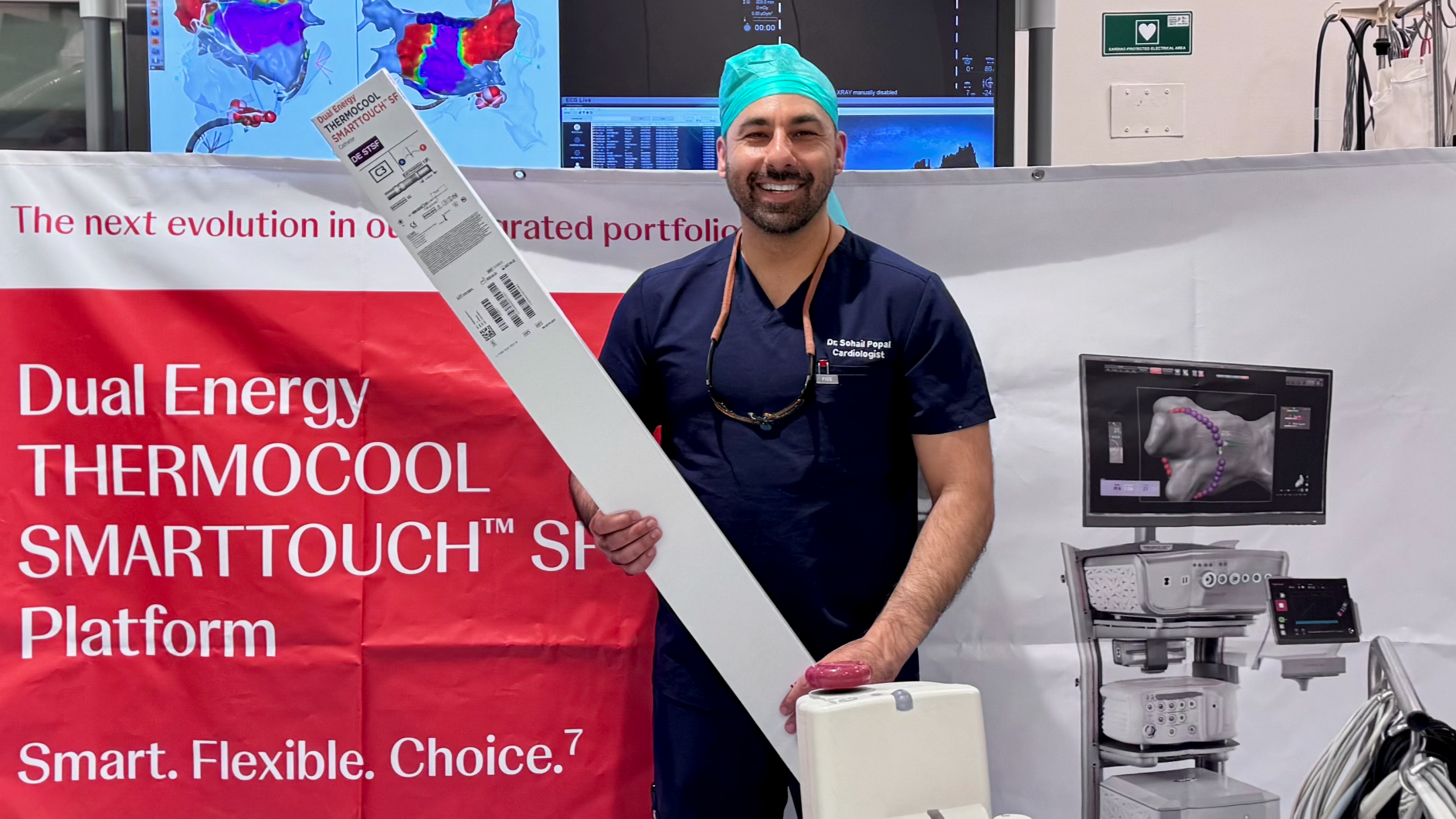
Sir Charles Gairdner Hospital (SCGH) recently became the first in Western Australia to use a novel dual-energy focal ablation catheter to perform a keyhole cardiac operation to treat rhythmic disturbance of the heart.
Atrial fibrillation (AF) is the most common abnormal heart rhythm (arrythmia) in the world, treated by cardiologists trained in electrophysiology.
SCGH Cardiology Consultant Doctor Sohail Popal said that an ablation catheter is used to create small areas of scar to block abnormal electrical signals in the heart that trigger AF or other arrhythmias.
"The procedure can be done with an ablation catheter that uses either cold (cryo), heat (RF) or high voltage (PFA) energy, with each energy modality having distinct advantages and disadvantages," he said.
"The special ablation catheter is a new form of technology that can toggle between heat and high voltage energies to focus on a discrete, small and specific location, and it has recently been used for the first time here at our hospital.
"This allows for more precise targeting of ablation lesions and the flexibility to use both heat and high voltage energy sources in different parts of the heart in the same patient.”
The new technology provides a new treatment option for patients with heart rhythm disorders, with the flexibility to tailor the ablation approach to the individual patient, making it more safe and effective.
"It’s very rewarding to be able to bring new technology and treatment options to patients here at SCGH,” Dr Popal said.
"More broadly, having access to the latest electrophysiology technology locally means patients can receive increasingly advanced care here in WA, closer to home."
This technology being provided by the highly-skilled multidisciplinary team by the electrophysiology service is a great example of how the organisation is embracing technology and innovation to support the community.