

Midwifery Antenatal Postnatal Service research shows benefits to both women and midwives
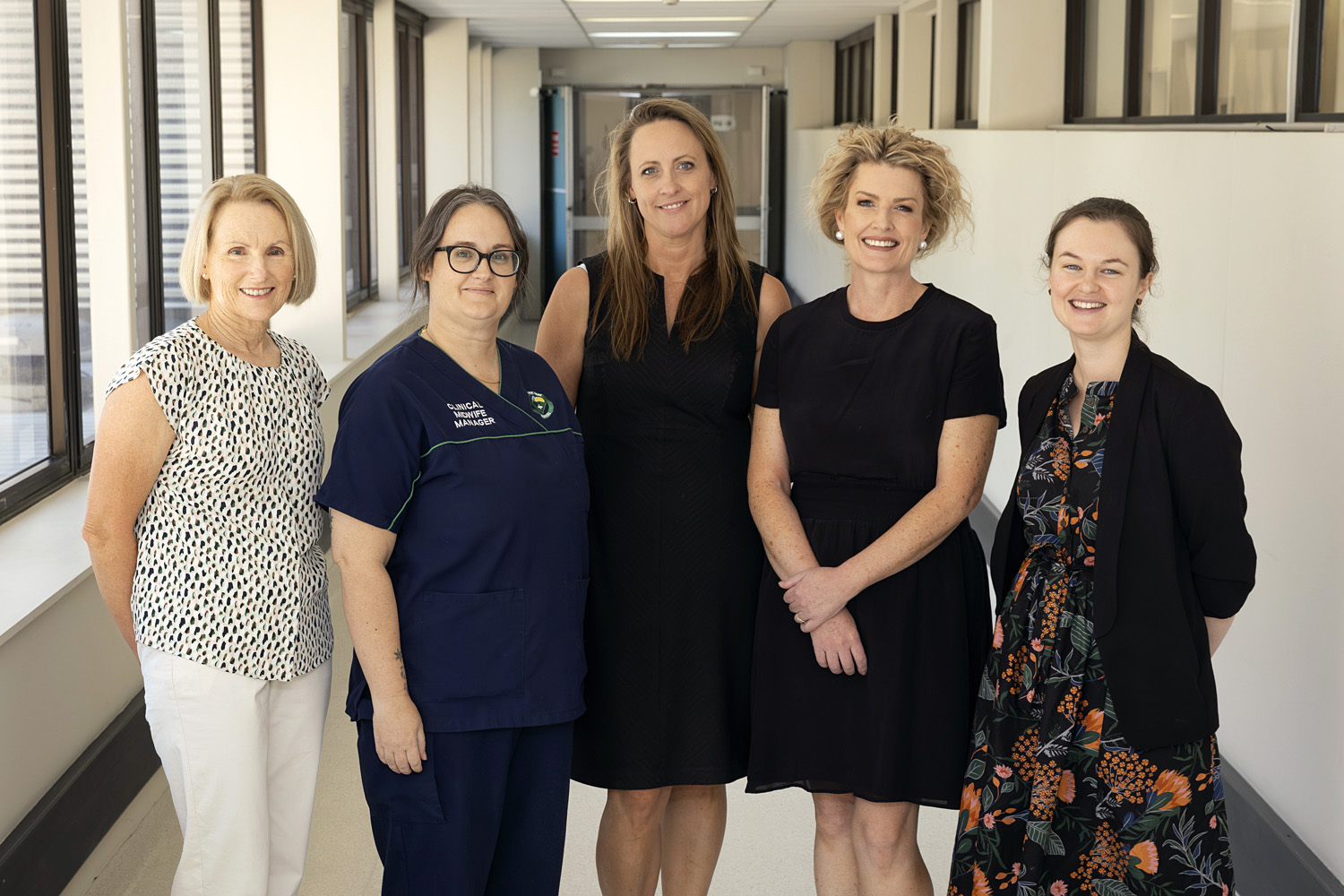
A recent study led by Women and Newborn Health Service that evaluated midwifery antenatal and postnatal service will help inform the introduction of contemporary midwifery services across Australia and assist health services to scale up midwifery care.
Titled ‘Midwifery Antenatal Postnatal Service (MAPS): A Retrospective Cohort Study Exploring Perinatal Outcomes and Consumer Satisfaction’, the study was recently published in Women and Birth Journal.
Trialled at Osborne Park Hospital between October 2023 and December 2024, it aimed to explore the perinatal outcomes of women with the MAPS program, compared to those receiving standard maternity care.
Led by a team of Women and Newborn Health Service researchers and clinicians, Professor Zoe Bradfield said the research was an important step in embedding MAPS as the primary model of care at Osborne Park Hospital.
“This was a shining example of a true team effort and the value of clinician-led research,” she said.
“Georgia Griffin and Elizabeth Nathan worked on the formal analysis, Kairan Meek and Bec Cronin conceptualised, led and gathered data and I supported by bringing all of those pieces together.
“We knew that evidence from Australia and England demonstrated that MAPS promoted midwives’ job satisfaction, autonomy and relationships with women.
“But we wanted to see if there were improved outcomes for women when compared to standard care.”
Midwifery Antenatal Postnatal Service differs from traditional midwifery group practice models by continuity being interrupted during the intrapartum care which is provided by a rostered hospital-based midwife.
Separating intrapartum care from antenatal and postnatal allows some benefits of continuity of care while enabling midwives to work without on-call requirements, providing flexible, sustainable approaches to workforce pressures.
Throughout the duration of the MAPS study, 1968 women birthed at OPH and 223 of those women were allocated to the MAPS trial.
Antenatal appointments occurred in hospital clinics or a woman’s home and postnatal care was provided at home.
“The women reported building an invaluable partnership with their midwife who they saw for all of their appointments,” Zoe said.
“They also said trust and comfort arose from the relationship which led to open communication and the ability to have direct phone contact with their midwife led to greater peace of mind and a reduced need for appointments.”
Midwifery Antenatal Postnatal Service is currently being implemented at Osborne Park Hospital as the primary model of care.
Read the full article (external site).